
Table of contents
Last updated: May 4, 2026
Grant management becomes difficult when nonprofits rely on spreadsheets and disconnected systems. The most common issues include lack of real-time visibility, manual processes, and poor tracking of restricted funds. The fix is to centralize your data, connect it to your accounting system, and track budgets against real transactions in real time.
Managing grants is one of the most complex parts of nonprofit finance. Between tracking restricted funds, staying compliant with reporting requirements, and managing multiple funding sources, even experienced teams can struggle to stay organized.
Many nonprofits still rely on spreadsheets or basic accounting tools, which creates gaps in visibility, accuracy, and control. Over time, these gaps lead to overspending, reporting errors, and hours of manual reconciliation.
In this guide, we break down the eight most common grant management challenges nonprofits face and practical ways to solve each one.
Key Takeaways
• Real-time visibility into grant budgets is critical to avoid overspending
• Spreadsheets do not scale for managing multiple grants
• Manual processes increase errors and slow down reporting
• QuickBooks alone does not provide full grant-level tracking
• Centralized grant management software improves accuracy, compliance, and efficiency
• Automation reduces reconciliation work and saves time
Grant Management Challenges at a Glance
The table below summarizes the eight most common challenges and their solutions:
Why Grant Management Is So Challenging
Grant management goes beyond bookkeeping. It requires managing multiple funding sources, each with different restrictions, timelines, and reporting requirements. According to the National Council of Nonprofits, financial management is consistently cited as one of the top operational challenges for grant-funded organizations.
Without a system that connects budgets, transactions, and reporting, teams end up working across disconnected tools. That is where most issues begin.
1. Lack of Real-Time Budget Visibility
The Problem
Most nonprofit finance teams only review grant budgets at month-end or quarter-end. By then, the numbers are already outdated, and decisions about spending have already been made using incomplete information. This is the single most common grant management challenge.
The Solution
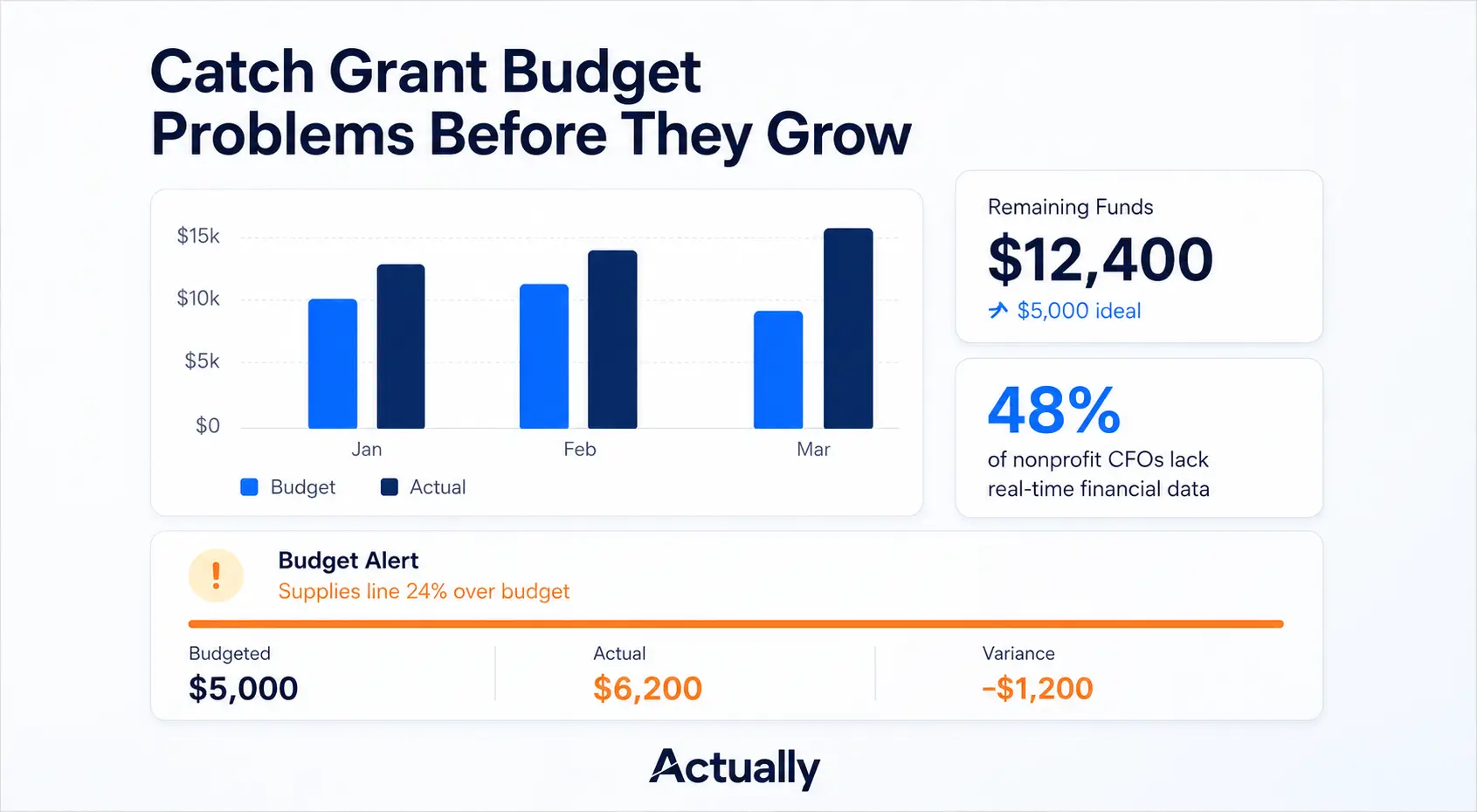
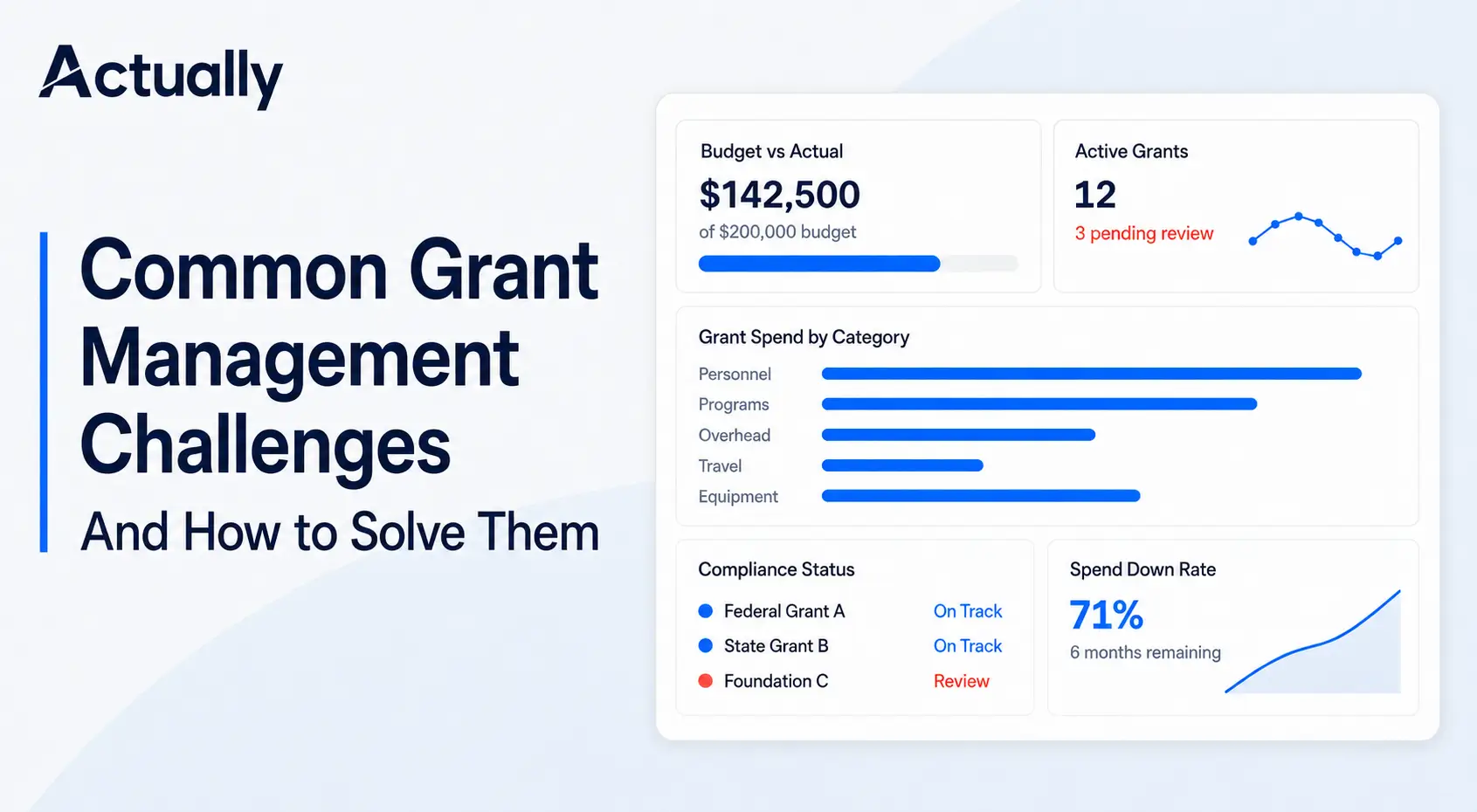
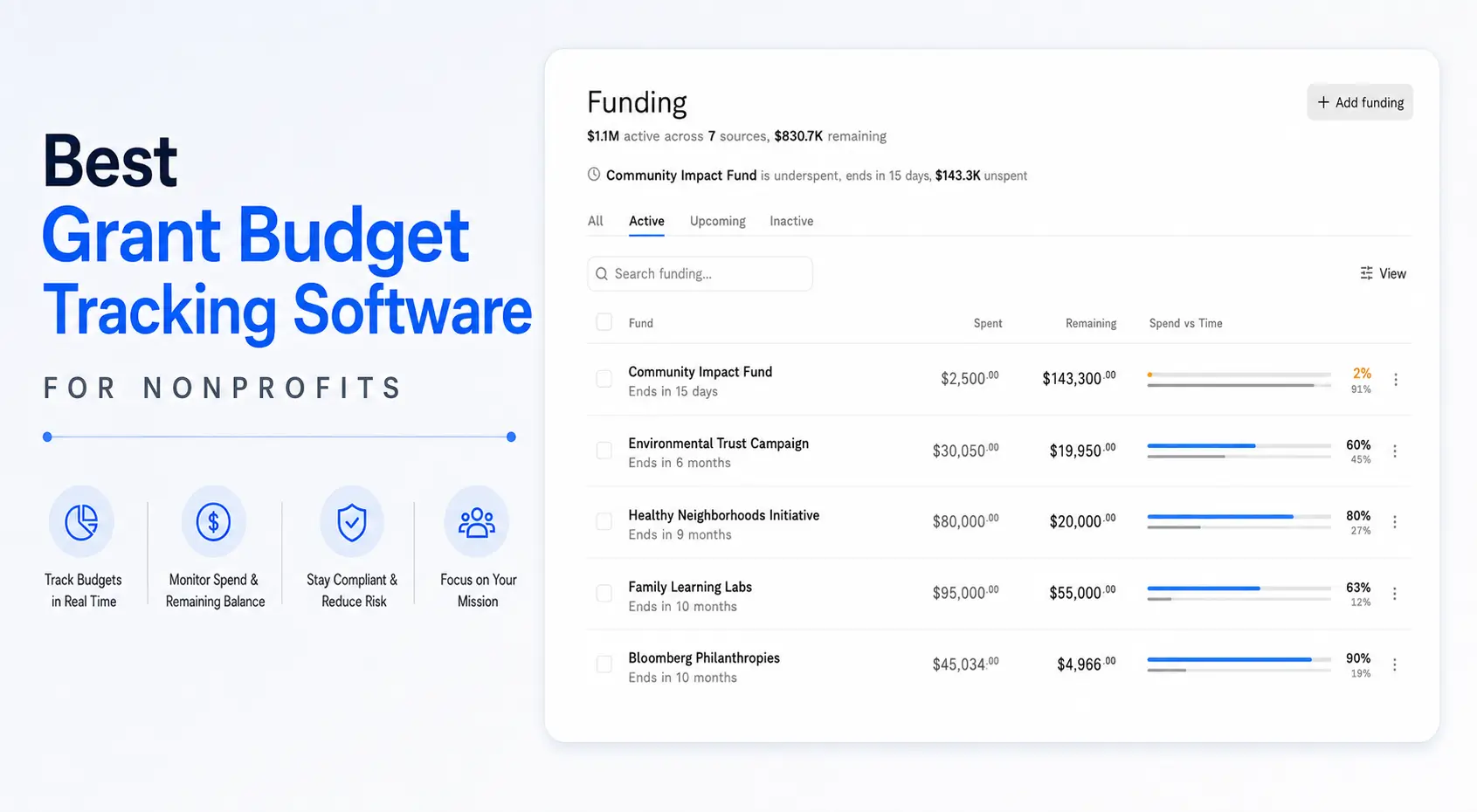
Move to real-time nonprofit grant tracking that shows budget versus actual spend continuously:
• Monitor budget versus actual spend as transactions post
• Get visibility into remaining funds instantly without waiting for reports
• Identify variances and potential issues before they become compliance problems
If you cannot see your grant balances at any moment, you are making decisions based on outdated data. Real-time visibility removes that guesswork completely.
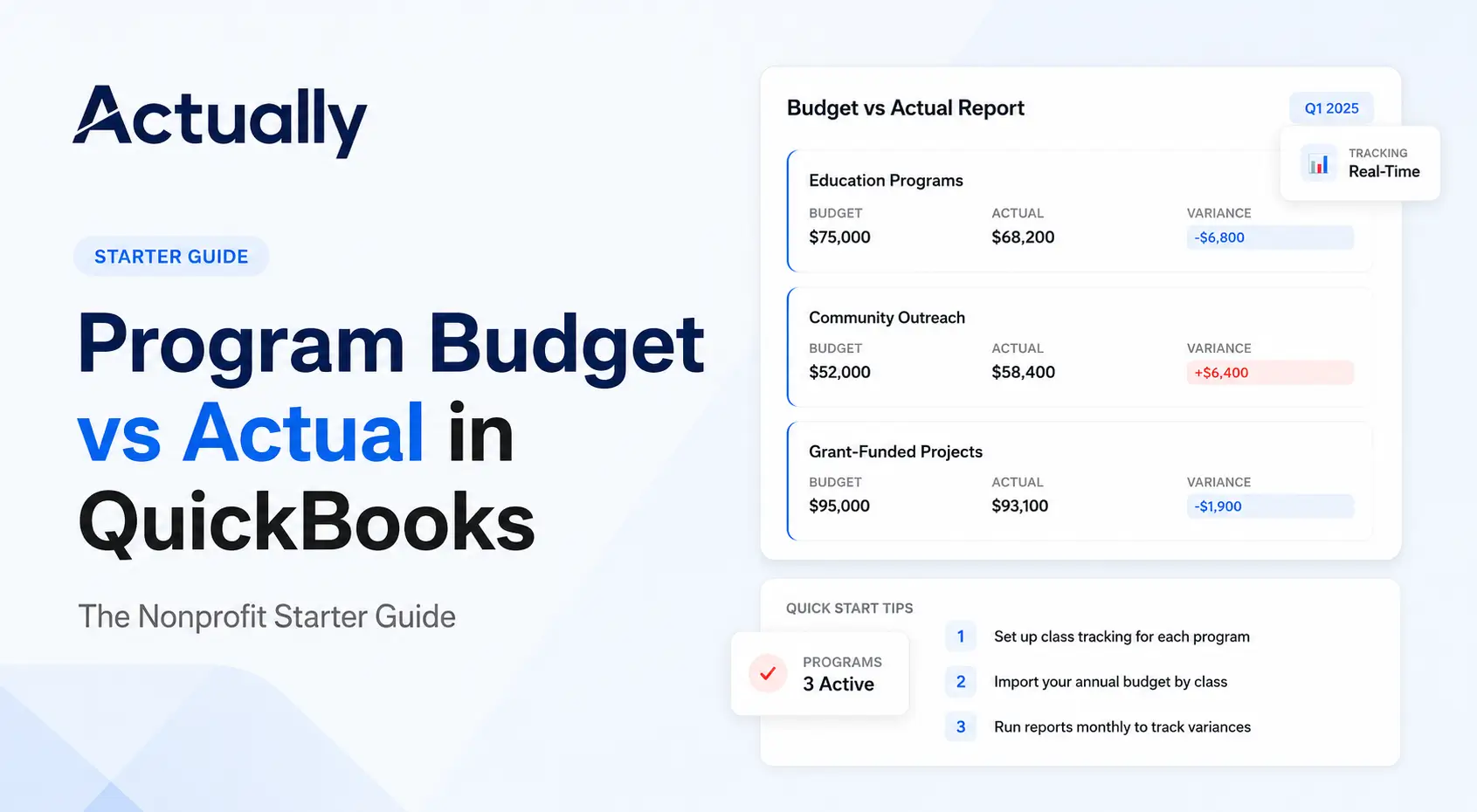
For a deeper dive into setting up budget-versus-actual tracking in your accounting system, see our guide on program budget vs actual in QuickBooks.
2. Difficulty Tracking Multiple Grants
The Problem
Managing multiple grants across spreadsheets leads to confusion, duplication, and inconsistent data. When each grant lives in its own file or tab, there is no single source of truth. Staff waste time cross-referencing documents, and errors compound across reporting periods.
The Solution
Centralize everything in one grant management system:
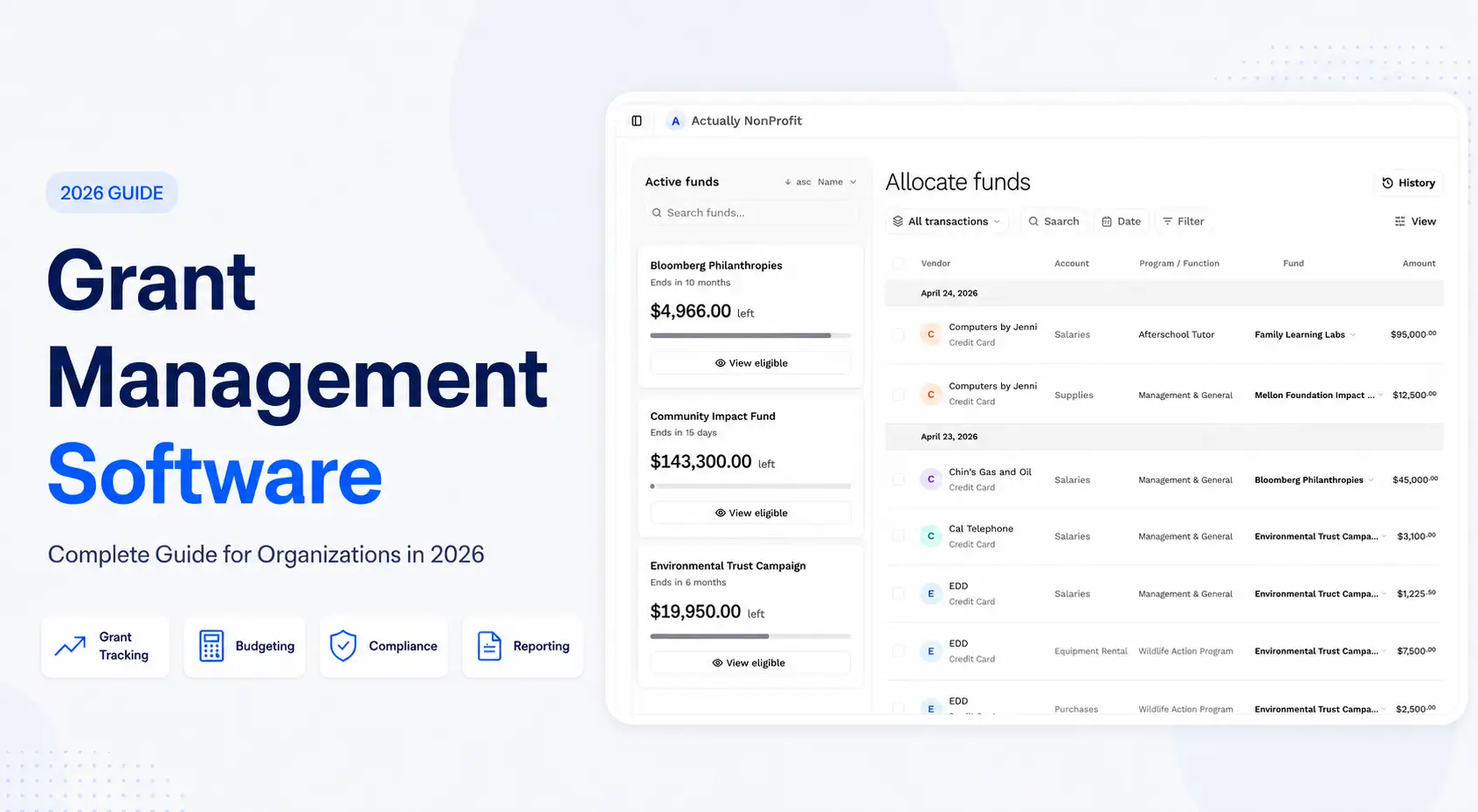
• Track all grants in one system with a unified dashboard
• Assign transactions directly to each grant as they occur
• Maintain a single source of truth that the entire finance team can access
Most teams do not struggle because grant management is inherently complex. They struggle because their data is spread across too many places.
3. Manual and Time-Consuming Processes
The Problem
Updating spreadsheets, reconciling transactions, and building reports manually takes hours every month. For organizations managing five or more active grants, the reconciliation burden alone can consume an entire week each month. Manual processes also introduce human error at every step.
The Solution
Automate wherever possible to reduce manual nonprofit grant tracking overhead:
• Sync transactions from QuickBooks automatically so data flows without re-entry
• Reduce manual data entry that creates errors and eats staff time
• Generate grant budget reports instantly instead of building them from scratch
Tired of spending hours reconciling spreadsheets? Tools like Actually automatically sync your grant budgets with real transactions, eliminating manual tracking entirely. Explore how Actually works →
4. Limited Visibility into Grant Restrictions
The Problem
It is easy to misallocate funds when restrictions are not clearly tracked at the transaction level. Most grants come with specific rules about how funds can and cannot be used, as outlined in 2 CFR Part 200 (Uniform Guidance). When these restrictions live in a grant agreement document rather than in your accounting system, the risk of accidental misallocation grows with every expense. A single misallocation can trigger audit findings, require fund returns, or damage funder relationships.
The Solution
Track restrictions at the transaction level to maintain ongoing compliance:
• Tag every expense by grant, restriction category, and budget line item
• Monitor compliance continuously rather than discovering issues at reporting time
• Create an audit trail that ensures funds are used correctly and can be verified by funders
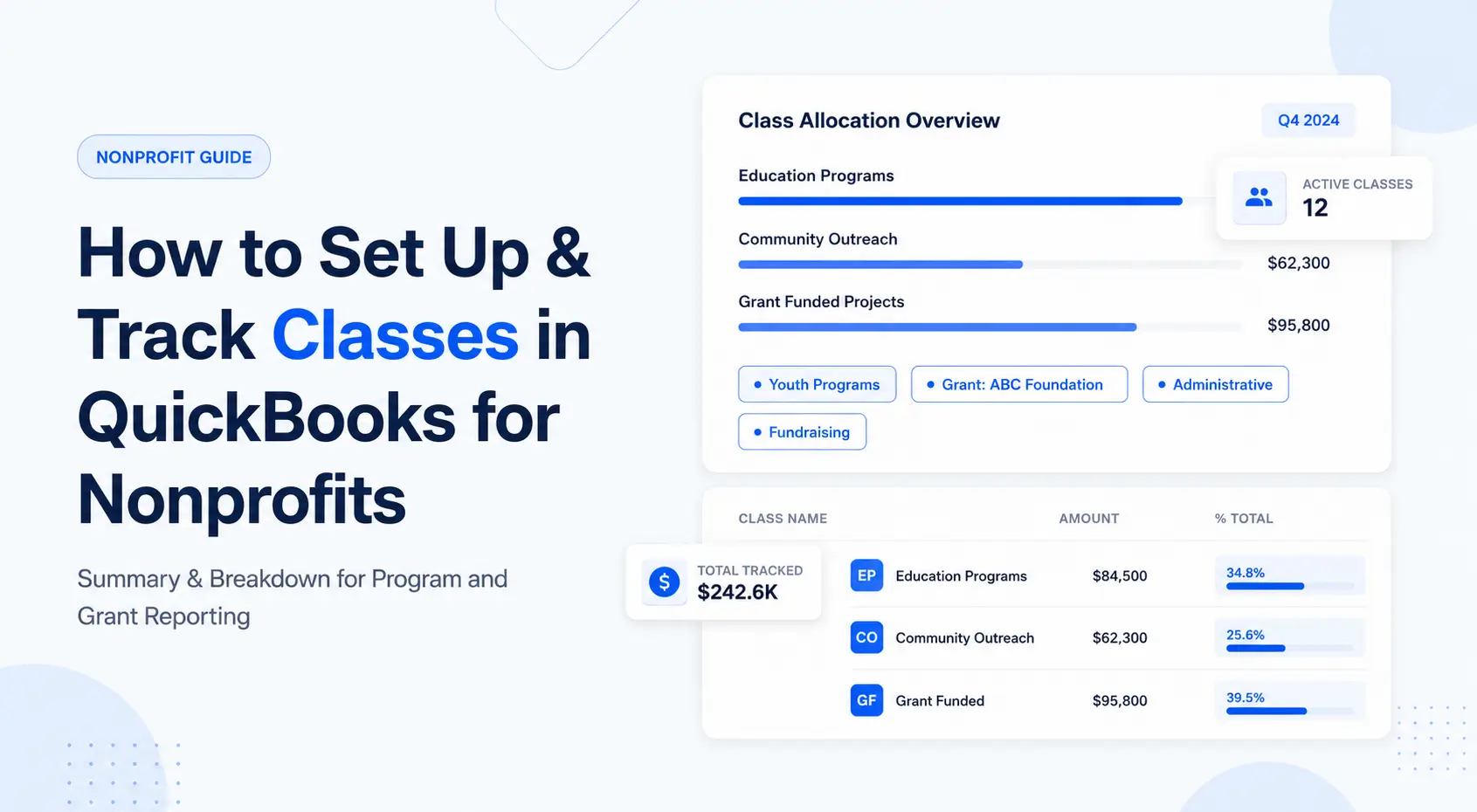
Need help organizing your chart of accounts to support grant tracking? See how to set up and track classes in QuickBooks for nonprofits.
5. Complex Reporting Requirements
The Problem
Custom funder reports take significant time and are often built manually from multiple data sources. Each funder has different reporting formats, timelines, and metrics, and nonprofits must also comply with FASB ASC 958 standards for nonprofit financial reporting. When your underlying data is not structured to support these requirements, every report becomes a custom project. Finance teams often spend days assembling a single funder report, pulling data from accounting software, spreadsheets, and program records.
The Solution
Use structured, automated grant reporting:
• Generate funder-ready reports instantly from data that is already organized correctly
• Customize report formats based on each funder’s specific requirements
• Ensure consistency across all reports by drawing from a single data source
Reporting becomes easy when your data is already organized correctly. The problem is rarely the report itself. It is how the data is structured behind it.
6. Over-Reliance on Spreadsheets
The Problem
Spreadsheets break as organizations scale. What starts as a simple tracking sheet becomes a fragile system of linked files, complex formulas, and manual updates. Common issues include:
• Version control problems when multiple staff edit the same file
• Broken formulas that silently produce incorrect totals
• Outdated numbers that no one realizes are stale until reporting time
• No audit trail showing who changed what and when
The Solution
Move to a live grant management system that replaces manual spreadsheet tracking:
• Centralize all grant data in one connected platform
• Eliminate manual updates that create versioning conflicts
• Keep everything current automatically through real-time syncing
7. Gaps Between Accounting and Grant Management
The Problem
QuickBooks is a strong accounting platform, but it does not provide grant-level visibility out of the box. This creates a disconnect between budgets and actual spending. Finance teams end up maintaining parallel systems: QuickBooks for accounting and spreadsheets for grant tracking. The two rarely agree, and reconciling them is time-consuming and error-prone.
The Solution
Add a grant budget management layer on top of QuickBooks:
• Sync transactions automatically so grant data reflects real accounting entries
• Connect grant budgets to actual QuickBooks data without duplicate entry
• See budget versus actual at the grant level while keeping QuickBooks as your system of record
QuickBooks tells you what happened. It does not tell you how your grants are performing. That is the missing layer most nonprofits need.
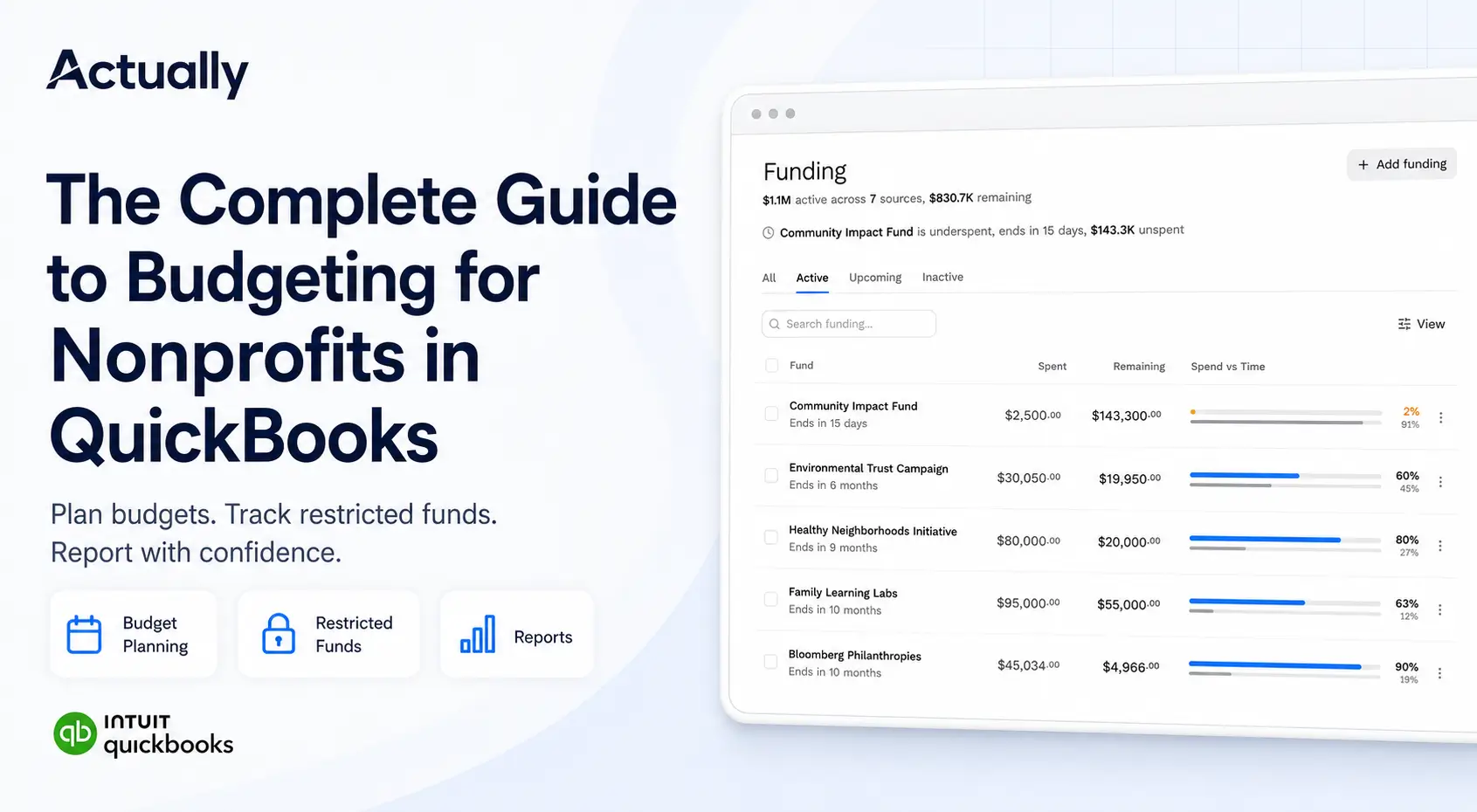
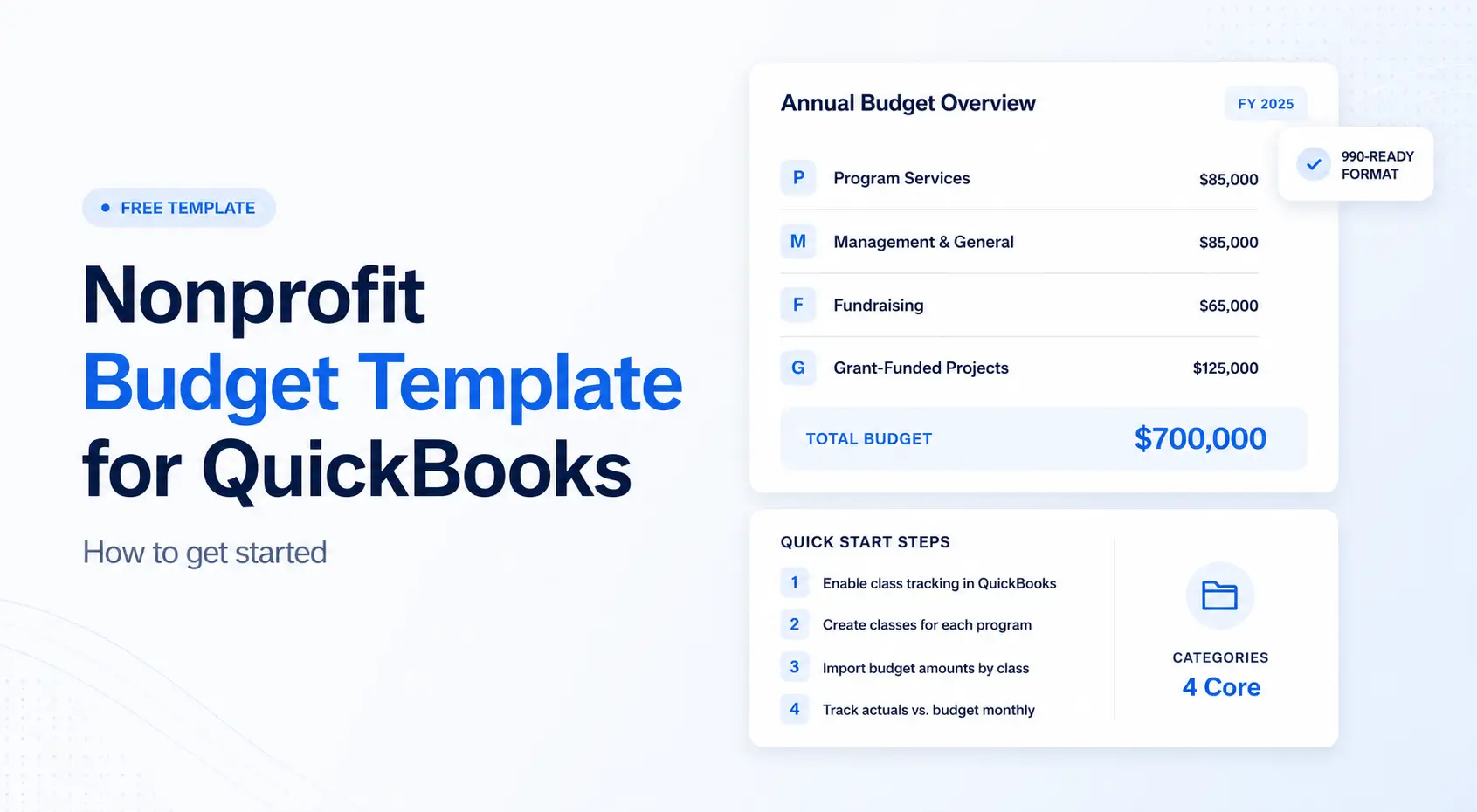
For a complete walkthrough of budgeting inside QuickBooks, read The Complete Guide to Budgeting for Nonprofits in QuickBooks.
8. Poor Spend-Down Management
The Problem
Without tracking spend in real time, teams either underuse grant funds or rush spending near the end of a grant period. Both outcomes create problems. Underuse signals to funders that the grant was not needed, potentially jeopardizing future funding. Rushed spending often leads to poor purchasing decisions and can raise red flags during audits. Effective spend-down management requires continuous monitoring, not end-of-period reviews.
The Solution
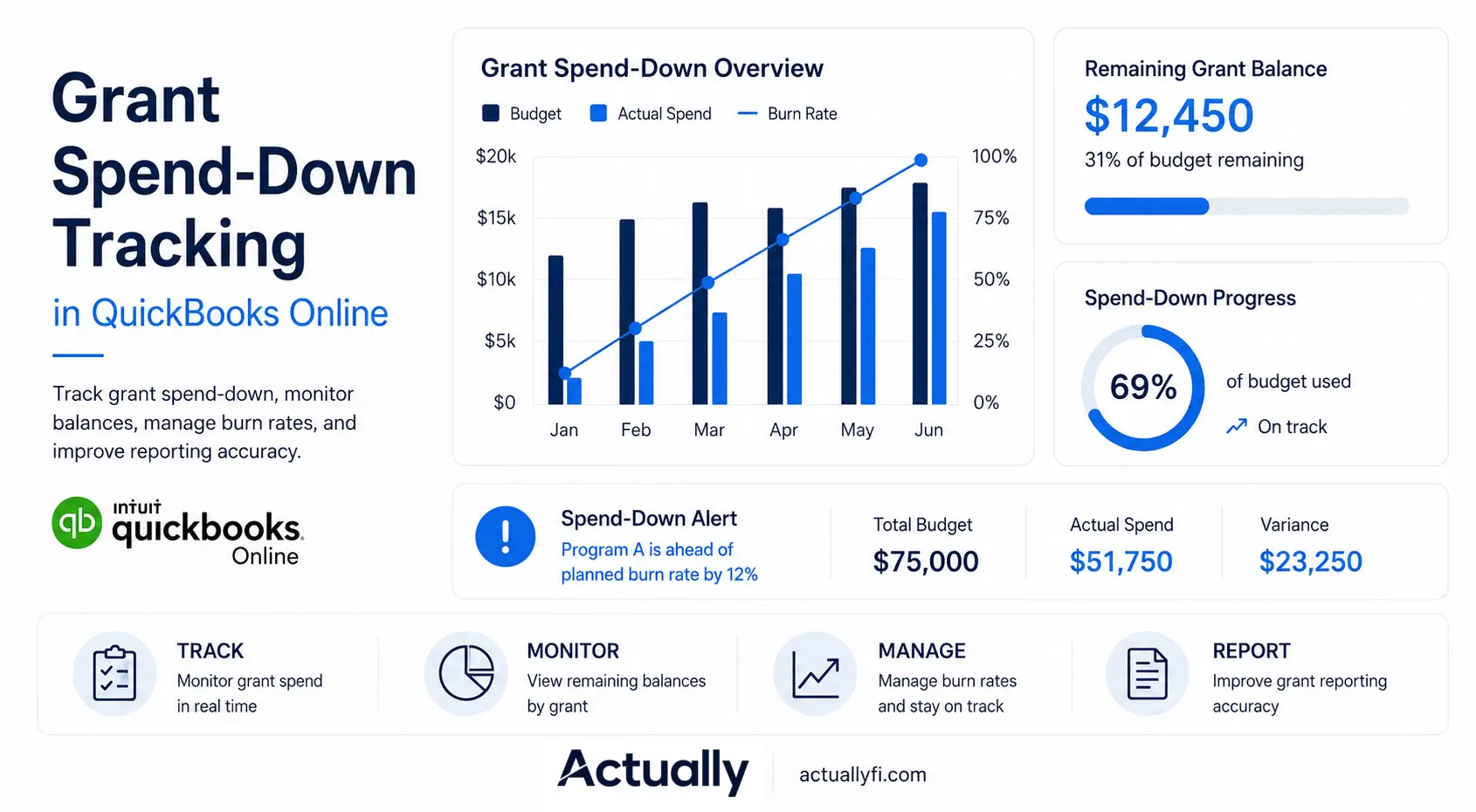
Monitor grant fund usage continuously with automated spend-down tracking:
• Track spend rate per grant against the timeline to ensure even distribution
• Identify unused funds early so program teams can adjust plans
• Set alerts for grants approaching key spending thresholds
• Adjust plans proactively rather than scrambling at the end of a grant period
A Better Way to Manage Grants
Here's what we keep hearing from nonprofit finance teams: the grant management problems aren't really about grants. They're about having data scattered across too many places QuickBooks for accounting, spreadsheets for budget tracking, shared drives for funder reports, and someone's email for the latest numbers.
The fix isn't adding more spreadsheets. It's connecting the systems you already have so budget data flows automatically and everyone sees the same numbers.
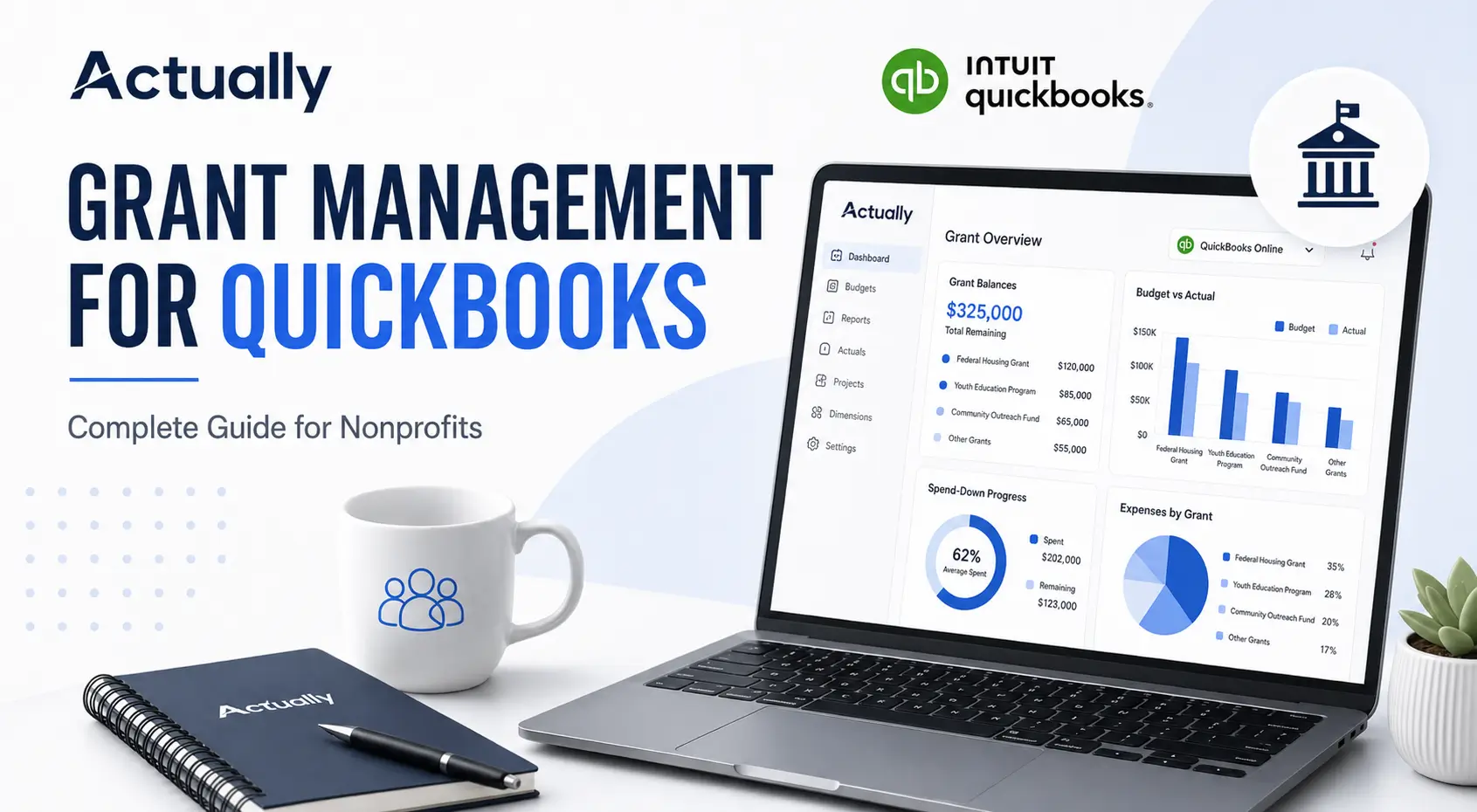
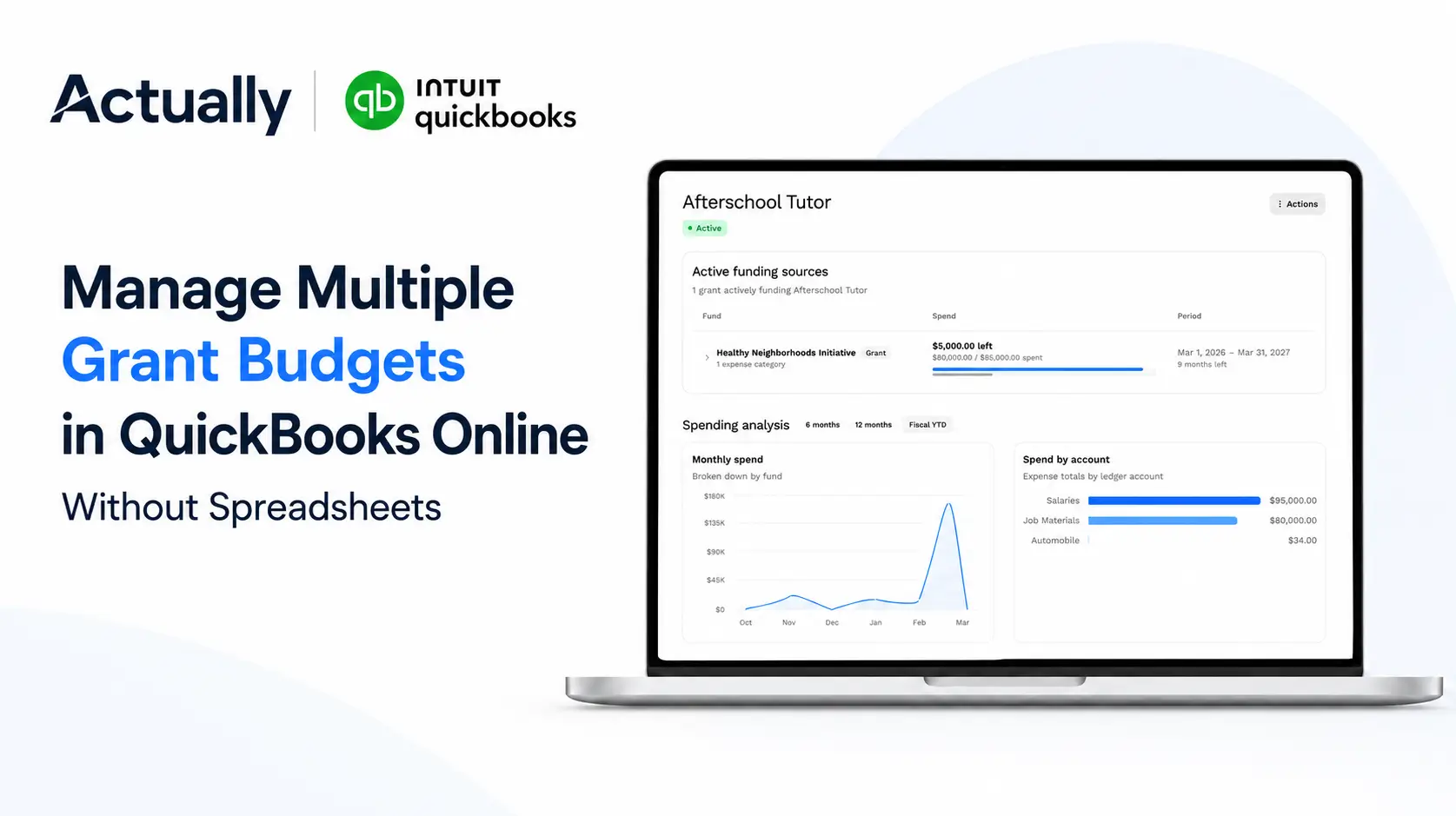
That's what Actually Finance was built to do sync directly with QuickBooks, show real-time grant budget vs. actuals on a single dashboard, track remaining grant funds without manual calculations, and eliminate the monthly reconciliation scramble by connecting budgets to live transaction data.
You don't have to change your accounting setup. You just add a visibility layer that makes grant management something your team can actually stay on top of.
Frequently Asked Questions About Grant Management
What is the biggest challenge in grant management?
It depends on who you ask, but the answer almost always traces back to the same root cause: not knowing where you stand financially until it's too late to do anything about it. Whether that shows up as overspending, compliance surprises, or frantic end-of-period reporting, the underlying issue is that most nonprofits only look at grant budgets at month-end or quarter-end. By then, the spending decisions have already been made. Real-time visibility into grant budgets not just accounting data, but actual budget-to-actual tracking eliminates most of these downstream problems.
How can nonprofits improve grant management?
Three things make the biggest difference. First, get your grant data out of disconnected spreadsheets and into a system that connects to your actual accounting transactions. Second, automate the repetitive stuff transaction syncing, report generation, budget calculations so your team spends time on analysis instead of data entry. Third, give your team a single source of truth they can check anytime, not just when someone runs a custom report. The specifics vary by organization, but those three shifts solve the majority of problems we see.
Why are spreadsheets not ideal for grant management?
Spreadsheets work fine when you have one or two grants and one person managing the budget. They start breaking when you add a third grant, a second person editing the file, or a funder who wants reports in a different format than the one you built. The core issues are version control (which copy is current?), formula fragility (one accidental edit can silently corrupt your totals), and the lack of an audit trail (who changed what, and when?). For organizations managing more than a couple active grants, the spreadsheet inevitably becomes the biggest source of errors rather than the tool preventing them.
Can QuickBooks handle grant management?
QuickBooks handles the accounting side well recording transactions, tracking income and expenses, generating financial statements. What it doesn't do natively is give you grant-level budget tracking. You can't easily answer "how much of Grant X's budget is left?" or "are we on pace to spend down by the deadline?" without exporting to a spreadsheet and building custom calculations. That's why most nonprofits that use QuickBooks for accounting add a grant management layer on top something like Actually to get the budget visibility that QuickBooks alone doesn't provide.
What is grant budget management?
It's the process of planning how grant funds will be spent, tracking actual spending against that plan, and monitoring compliance with the funder's rules throughout the grant period. It's broader than just bookkeeping it includes creating the grant budget, setting up tracking so expenses are allocated correctly, running budget-vs.-actual reports, managing spend-down pace, and generating funder-ready compliance reports. Done well, it prevents the two most common grant problems: running out of money before the grant period ends, or scrambling to spend remaining funds in the final weeks.
Why is real-time grant tracking important?
Because grant problems are almost always easier to fix early than late. If you discover in week 8 that a program is 15% over budget, you can adjust. If you discover it in month 11 during final reporting, your options are limited and the conversation with your funder is a lot less pleasant. Real-time tracking also reduces the time your finance team spends on manual reconciliation instead of rebuilding budget reports from scratch each month, they're looking at live data and flagging issues as they emerge.

David Cristello
.svg)
About the Author
David Cristello is the Co-Founder of Actually Finance. He's been an entrepreneur in the accounting and nonprofit space for over 10 years, previously building a company that made the Inc5000 list
.png)






.webp)